


In This Article:
We often talk about the importance of building muscle, but here’s the truth: Maintaining muscle matters just as much, especially as we age.
Are Older Adults Getting Enough Protein?
A study out of Ohio State University found that nearly half of older adults aren’t even hitting the minimum daily protein recommendation of 0.8 g/kg of body weight per day. That’s about 63 grams of protein for a 175 lb adult.
Keep in mind: That’s the minimum recommended intake for sedentary adults. So if your goal is to stay active, mobile, and independent well into your later years (which we hope it is) you’ll need to pay attention to your protein intake.
Consequences of Inadequate Protein Intake
In this study, adults who weren’t getting enough protein struggled with everyday things like walking half a mile, climbing stairs, kneeling, and lifting heavier objects. They were also more likely to be deficient in other key nutrients like zinc, selenium, and essential vitamins.
The takeaway? It’s not just about looking fit. Protein is a key piece of staying functional, strong, and well-nourished for the long run.
How Much Protein Should You Actually Aim For?
Recent research shows that aiming for a daily protein intake between 1.2 and 1.6 grams per kilogram of body weight can help preserve muscle mass, support healthy weight loss, and even promote muscle growth in older adults. This is especially true when higher protein intake is combined with regular strength training. It’s a powerful pairing that helps offset the natural muscle loss that comes with aging and supports a healthier body composition overall.
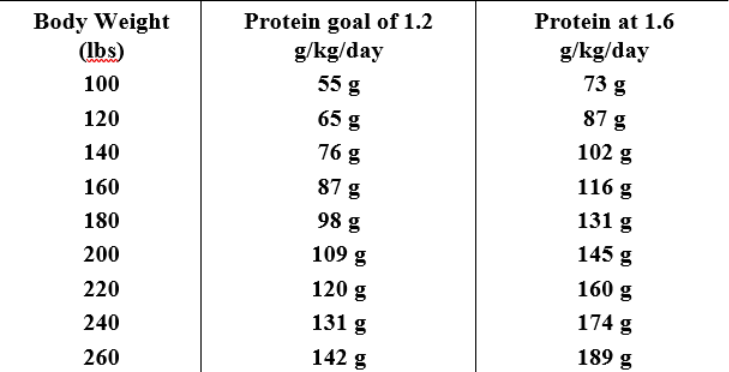
So, what does that actually mean for you? Keep reading and you will find a chart we have created to help simply show you what your daily protein goal should be.
Lesser Known Benefits of Protein
Mental Health and Neurotransmitter Production
Protein is also important for your mind. Key amino acids found in protein-rich foods are used to create neurotransmitters like serotonin and dopamine. These “feel good” brain chemicals help regulate mood, motivation, and focus. Research has shown that low protein intake, especially low intake of specific amino acids like tryptophan and tyrosine, can be associated with increased risk of depression and anxiety.
Getting enough protein each day helps ensure your brain has the raw materials it needs to function well emotionally as well as physically.
Protein’s Role During Illness or Injury
Protein status becomes even more critical when we’re sick or injured. In hospitalized patients, meeting daily protein goals has been linked to better outcomes, including shorter hospital stays, faster recovery, and fewer complications. Muscle is the body’s reserve during illness and stress, and maintaining it is an important part of staying resilient.
Metabolic Benefits for Prediabetes or Diabetes
There’s also a strong metabolic benefit to getting enough protein. When you consistently meet your protein needs and build muscle, your body becomes much better at handling glucose. That’s because your muscles are one of the main places your body stores blood sugar.
More muscle means better glucose storage and improved insulin sensitivity. Over time, this can help lower blood sugar levels, reduce the risk of Prediabetes, and support overall metabolic health. For more information on the importance of understanding insulin sensitivity, check out our write up here: “Prediabetes and Diabetes.”
So whether your goal is to stay active, support your mental health, bounce back from illness, or improve your metabolism, protein has a role to play.
How Much Protein Is Right for You?
Below is a general guide based on research supported targets of 1.2 g/kg and 1.6 g/kg of body weight per day. Use your actual weight to estimate a realistic daily protein goal.
Need Help Meeting Your Protein Goals?
Feeling unsure how to hit your protein goals? We’d love to help. Book a quick session with us to talk through easy meal ideas and how to combine your nutrition with movement for better results.
Curious if you are doing enough to maintain muscle? We also help evaluate protein break down in the body by using high level functional lab testing. Read more about what this test can reveal here: “Muscle Preservation and Protein Needs Package“.
References
Krok-Schoen, J. L., Archdeacon Price, A., Luo, M., Kelly, O. J., & Taylor, C. A. (2019). Low dietary protein intakes and associated dietary patterns and functional limitations in an aging population: A NHANES analysis. The Journal of Nutrition, Health & Aging, 23(4), 338–347. https://doi.org/10.1007/s12603-019-1174-1
Nunes EA, Colenso-Semple L, McKellar SR, Yau T, Ali MU, Fitzpatrick-Lewis D, Sherifali D, Gaudichon C, Tomé D, Atherton PJ, Robles MC, Naranjo-Modad S, Braun M, Landi F, Phillips SM. Systematic review and meta-analysis of protein intake to support muscle mass and function in healthy adults. J Cachexia Sarcopenia Muscle. 2022 Apr;13(2):795-810. doi: 10.1002/jcsm.12922. Epub 2022 Feb 20. PMID: 35187864; PMCID: PMC8978023.
Wempen, K. (2023, July 17). Assessing protein needs for performance. Mayo Clinic Health System. Retrieved from https://www.mayoclinichealthsystem.org/hometown-health/speaking-of-health/assessing-protein-needs-for-performance
Phillips, S. M., Paddon-Jones, D., & Layman, D. K. (2020). Optimizing Adult Protein Intake During Catabolic Health Conditions. Advances in Nutrition, 11(4), S1058–S1069. https://doi.org/10.1093/advances/nmaa047
Gasmi A, Nasreen A, Menzel A, Gasmi Benahmed A, Pivina L, Noor S, Peana M, Chirumbolo S, Bjørklund G. Neurotransmitters Regulation and Food Intake: The Role of Dietary Sources in Neurotransmission. Molecules. 2022 Dec 26;28(1):210. doi: 10.3390/molecules28010210. PMID: 36615404; PMCID: PMC9822089.
Get our free guide to magnesium supplementation!
Sign up for our newsletter and receive the guide for free, along with evidence-based health insights straight to your inbox.
-
Learn about the benefits of magnesium and which varieties provide the best benefits
-
Understand the different types of magnesium supplements
-
Get recommended dosage for optimal wellness