
Stay Well During Cold & Flu Season: Your Preventative Playbook

Last modified: March 24, 2026
In This Article:
Every year, when cold & flu season rolls around, most people brace for battle. It seems like something you often hear in the community… “Well, the kids are back in school so here comes the germs.”
We decided to create a seasonal blueprint. These strategies are backed by research and common sense to help keep your immune system primed and to help reduce your likelihood of catching (or suffering badly from) a cold or flu.
1. Hand Hygiene: The Simple & Powerful First Defense
Before anything fancy, this is your foundational move… simply wash your hands well and often. Sometimes common sense is the first thing we forget, so here is a gentle reminder.
Why Handwashing Matters
Studies show that interventions promoting handwashing with soap can reduce acute respiratory infections by about 17%.
Tips for Effective Hand Hygiene
- Use soap and warm water whenever possible (20 seconds minimum, covering all surfaces: backs of hands, between fingers, under nails).
- If soap and water aren’t available, use ≥ 60% alcohol hand rub (though it’s less effective for certain spores).
- Wash at key moments: before eating, after using the restroom, after touching public surfaces (door handles, grocery carts, and gas stations), after coughing/sneezing, and before touching your face.
Handwashing is cheap and easy! We like to start with the cheap interventions that everyone can benefit from.
2. Sleep & Recovery: Your Immune Reset
Why Sleep Is Critical
Quality sleep is so important during cold & flu season, it’s actually part of your immune defense strategy. Good sleep is one of the best ways to prevent getting sick in the first place!
Deep sleep is when your body coordinates repair, inflammation control, and immune cell communication (especially cytokines, the hardworking proteins that get released by our immune cells). Even short “power naps” can lower stress hormones (like cortisol), which frees the immune system to function more effectively.
Chronic sleep debt dulls immune response, making infections more likely to take a stronghold and making you slower to recover.
Sleep Playbook
- Aim for 7–9 hours of deep, uninterrupted rest.
- Dim screens and lights 1–2 hours before bed to preserve melatonin.
- Prioritize a cool, dark bedroom.
- When feeling “off,” nap or rest—listen to your body.
- Consider consulting with your doctor about trying out a melatonin supplement if you struggle with sleep. Melatonin is a powerhouse antioxidant and immune modulator.
Curious about more targeted sleep help? Check out our dedicated category here: Sleep.
3. Movement, Sauna, Cold Plunge & Circulation Boost
a. Moderate Exercise
Regular moderate movement (walking, yoga, cycling) enhances blood flow, boosts immune cell distribution, and helps clear waste. Exercise also has an anti-inflammatory effect and boosts the circulation of immune cells, allowing the “early” fighters to scavenge for invaders more efficiently.
Want more comprehensive resources for how best to tackle exercise, check out our section here: Exercise.
b. Sauna / Heat Therapy
Saunas raise core temperature, mimicking a mild fever, which can trigger immune activation and pump up your detox pathways. Sweating is a natural way your body clears out toxins.
- Use 1–3 times per week if available.
- Start with about 10 minutes of sauna, beginning the clock after you’ve begun to sweat.
- Hydrate well before and after. Add electrolytes or a squirt of lemon to your water for more efficient absorption.
c. Cold Plunge / Cold Exposure
Cold exposure (brief and controlled) may boost circulation, trigger norepinephrine release, and strengthen stress tolerance. Be cautious if unwell and start conservatively. Begin with just 1-3 minutes of cold immersion and work your way up to about 5 minutes.
Together, these “thermal stresses” can build resilience and challenge your immune system.
4. Nutrition & Eating Smart
a. Eat the Rainbow and Anti-inflammatory Foods
- Vegetables high in antioxidants (like berries, leafy greens, cruciferous veggies) are critical. Aim for fruit/veggies at every meal.
- Spices like turmeric, ginger, garlic, cayenne, and black pepper add immune-supportive compounds.
- Healthy fats (olive oil, avocado, fatty fish) support cell membranes and reduce excessive inflammation.
b. Protein & Amino Acids
When fighting infection, your body needs more amino acids for making immune cells, enzymes, and antibodies. Try chicken, eggs, fish, yogurt, nuts, bone broth, etc. as part of your daily meal routines.
There is so much to say about eating adequate amounts of protein. Less than optimal protein means a less than optimal immune system. Check out more about protein goals here: Protein and Aging.
c. Complex Carbs
Don’t fear carbs entirely but consider simple, easy-to-digest carbs (like sweet potatoes, squash, fruit) to help provide quick energy. Combine carbs with protein/fat to stabilize blood sugar.
d. Hydration (again!)
Fluids help thin mucus, support circulation, and flush waste. Add electrolytes (salt, potassium, magnesium) to avoid imbalance, especially if sweating or feverish. Teas, broths, and water… drink early and often.
Quick Recipe Idea: Immune Power Soup
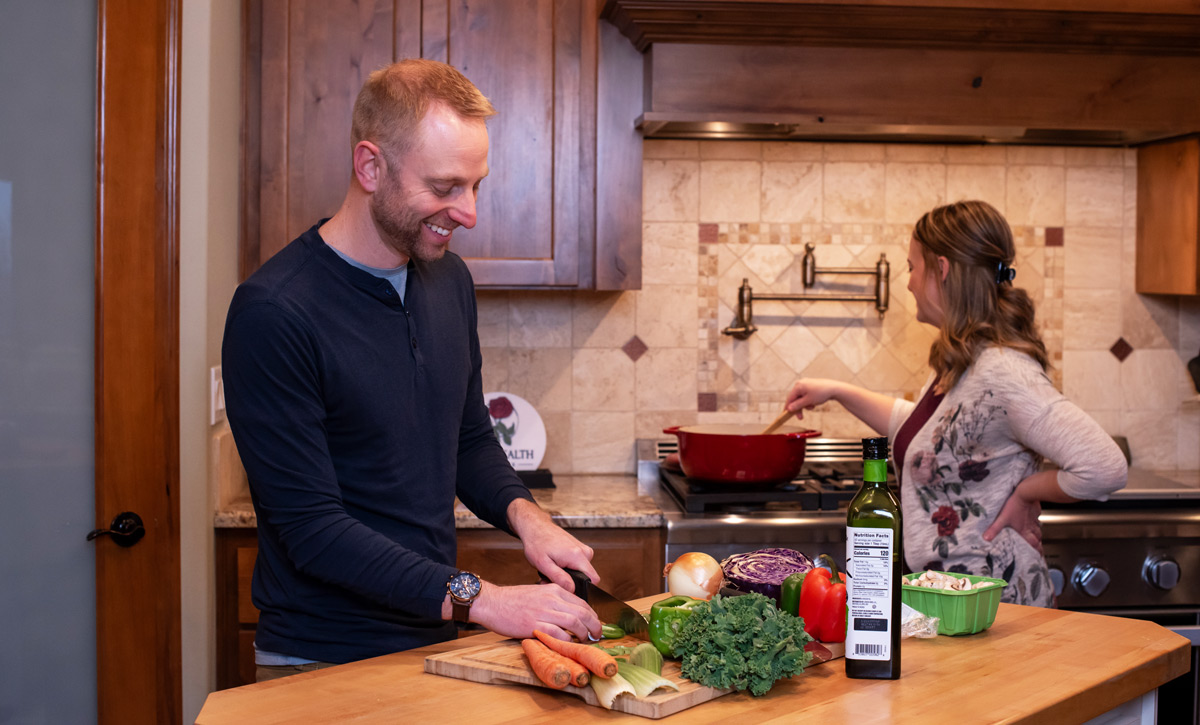
Made with a bone or protein broth base, carrots, garlic, ginger, kale or spinach, turmeric, and diced chicken or beans. Freeze half for a healthy “backup” when you’re too tired to cook.
5. Sunlight, Fresh Air and Natural Exposure
Don’t underestimate the power of being outdoors. Even short daily exposure offers benefits:
- Boosts vitamin D (even if supplemented)
- Increases circulation and lymph flow
- Improves mood and stress resilience, which supports immunity
- Exposes you to beneficial microbes that help diversify gut bacteria
Aim for at least 10–15 minutes of daylight exposure daily (when weather allows), especially in morning light.
6. Stress Management & Mental Reset
Why Stress Management Matters
Stress is one of the heaviest immune suppressants. Chronic stress weakens immune function, raises cortisol, and derails sleep. To read more, check out our write up here: Stress Management.
Tools to Manage Stress During Cold Season
- Daily breathwork (5 min calm belly breathing)
- Meditation, prayer, or quiet reflection
- Gentle walks in nature
- Laughter, music, dancing, using your creativity
- Setting boundaries, learning to be okay with saying “no,” and lowering exposure to inflammatory stimuli
Rest is part of our defense; stress is often an invitation to get sick.
7. Supplements & Nutrients That Support Defense
While food and daily habits form your foundation, certain supplements can act as helpful “boosters” during cold/flu season. Always consult your provider, especially if you’re on medications or have health conditions.
Top Picks for Supplement Support
| Supplement | How It Helps | Notes / Best Forms |
| Vitamin D | Many studies link low vitamin D levels to increased respiratory infection risk | Take daily (e.g. 2,000–5,000 IU depending on your baseline) |
| Nasal Sprays | Helps to flush out any viruses attempting to attach and replicate | Great preventative tool after known exposure to someone who has been sick |
| Vitamin C | Major antioxidant; activates immune cells, modulates inflammation, strengthening all aspects of your immune system | Liposomal forms may have better absorption |
| Zinc | Required to produce many immune cells and regulate inflammatory responses | Lozenges or capsules; don’t overdo long term |
| Fish Oil | Helps to strengthen cell membranes and reduce inflammation | High quality brands are important; take with a meal |
| Pro-biotics | Support gut microbiome, which is deeply tied to immune function | Foods like kefir, sauerkraut, kimchi, or a probiotic supplement |
Building Your Healthy Habits
A note on risk and strategy… None of these tools guarantee you won’t get sick. But they do tilt the odds strongly in your favor. When your immune system is primed, rested, and fueled, bugs still might land, but your body handles them with more grace, resulting in fewer symptoms, shorter duration, and stronger resilience afterward.
Prevention is about creating a strong army for when that battle cry is heard. The small daily “micro investments” you make compound over time.
During cold and flu season, practice building these healthy habits to help prepare your body for any fight. It will take more mindfulness and preparation but even a few new habits can make a big difference!
References
Toney-Butler, T. J., Gasner, A., & Carver, N. (2025). Hand hygiene. In StatPearls. StatPearls Publishing. https://www.ncbi.nlm.nih.gov/books/NBK470254/
Ibarra-Coronado EG, Pantaleón-Martínez AM, Velazquéz-Moctezuma J, Prospéro-García O, Méndez-Díaz M, Pérez-Tapia M, Pavón L, Morales-Montor J. The Bidirectional Relationship between Sleep and Immunity against Infections. J Immunol Res. 2015;2015:678164. doi: 10.1155/2015/678164. Epub 2015 Aug 31. PMID: 26417606; PMCID: PMC4568388.
Wang J, Zhao W, Ding J, Li Y. The effect of physical activity on anti-infection immunity: a review. Health Inf Sci Syst. 2025 Jul 23;13(1):45. doi: 10.1007/s13755-025-00360-8. PMID: 40717906; PMCID: PMC12287504.
Nieman, D. C. (1999). Exercise, infection, and immunity: Practical applications. In Military strategies for sustainment of nutrition and immune function in the field (Institute of Medicine (US) Committee on Military Nutrition Research, Ed.). National Academies Press (US). https://www.ncbi.nlm.nih.gov/books/NBK230961/
Ernst E, Pecho E, Wirz P, Saradeth T. Regular sauna bathing and the incidence of common colds. Ann Med. 1990;22(4):225-7. doi: 10.3109/07853899009148930. PMID: 2248758.
Kunutsor SK, Lehoczki A, Laukkanen JA. The untapped potential of cold water therapy as part of a lifestyle intervention for promoting healthy aging. Geroscience. 2025 Feb;47(1):387-407. doi: 10.1007/s11357-024-01295-w. Epub 2024 Jul 30. PMID: 39078461; PMCID: PMC11872954.
Calder PC, Carr AC, Gombart AF, Eggersdorfer M. Optimal Nutritional Status for a Well-Functioning Immune System Is an Important Factor to Protect against Viral Infections. Nutrients. 2020 Apr 23;12(4):1181. doi: 10.3390/nu12041181. PMID: 32340216; PMCID: PMC7230749.
Ranjan P, Dey A, Sharma VP, Tiwari NK. Importance of Natural Proteins in Infectious Diseases. Biomedical Applications of Natural Proteins. 2015 Aug 8:101–13. doi: 10.1007/978-81-322-2491-4_8. PMCID: PMC7123379.
Popkin BM, D’Anci KE, Rosenberg IH. Water, hydration, and health. Nutr Rev. 2010 Aug;68(8):439-58. doi: 10.1111/j.1753-4887.2010.00304.x. PMID: 20646222; PMCID: PMC2908954.
Panel on Dietary Reference Intakes for Electrolytes and Water. Dietary Reference Intakes for Water, Potassium, Sodium, Chloride, and Sulfate. Washington DC: National Academy Press; 2005.
Hobday RA, Dancer SJ. Roles of sunlight and natural ventilation for controlling infection: historical and current perspectives. J Hosp Infect. 2013 Aug;84(4):271-82. doi: 10.1016/j.jhin.2013.04.011. Epub 2013 Jun 20. PMID: 23790506; PMCID: PMC7132476.
Marshall GD Jr. The adverse effects of psychological stress on immunoregulatory balance: applications to human inflammatory diseases. Immunol Allergy Clin North Am. 2011 Feb;31(1):133-40. doi: 10.1016/j.iac.2010.09.013. PMID: 21094928; PMCID: PMC2991159.
Hemilä H. Vitamin C and Infections. Nutrients. 2017 Mar 29;9(4):339. doi: 10.3390/nu9040339. PMID: 28353648; PMCID: PMC5409678.
NIH Office of Dietary Supplements. (n.d.). Vitamin D — Health Professional Fact Sheet. U.S. Department of Health and Human Services, National Institutes of Health. Retrieved [insert retrieval date], from https://ods.od.nih.gov/factsheets/VitaminD-HealthProfessional/
Sadeghsoltani F, Mohammadzadeh I, Safari MM, Hassanpour P, Izadpanah M, Qujeq D, Moein S, Vaghari-Tabari M. Zinc and Respiratory Viral Infections: Important Trace Element in Anti-viral Response and Immune Regulation. Biol Trace Elem Res. 2022 Jun;200(6):2556-2571. doi: 10.1007/s12011-021-02859-z. Epub 2021 Aug 9. PMID: 34368933; PMCID: PMC8349606.
Carpinter BA, Renhe DC, Bellei JCB, Vieira CD, Rodolphi CM, Ferreira MVR, de Freitas CS, Neto AFDS, Coelho EAF, Mietto BS, Gomes FLR, Rocha VN, Scopel KKG. DHA-rich fish oil plays a protective role against experimental cerebral malaria by controlling inflammatory and mechanical events from infection. J Nutr Biochem. 2024 Jan;123:109492. doi: 10.1016/j.jnutbio.2023.109492. Epub 2023 Oct 21. PMID: 37866427.
Iqbal Z, Ahmed S, Tabassum N, Bhattacharya R, Bose D. Role of probiotics in prevention and treatment of enteric infections: a comprehensive review. 3 Biotech. 2021 May;11(5):242. doi: 10.1007/s13205-021-02796-7. Epub 2021 Apr 27. PMID: 33968585; PMCID: PMC8079594.
Get our free guide to magnesium supplementation!
Sign up for our newsletter and receive the guide for free, along with evidence-based health insights straight to your inbox.
-
Learn about the benefits of magnesium and which varieties provide the best benefits
-
Understand the different types of magnesium supplements
-
Get recommended dosage for optimal wellness